

Auctions
We offer a diverse and exciting calendar of over 70 specialist auctions per annum as well as single owner collections and house sales.


Valuations
Our valuation services include: free online auction valuations, virtual valuations, home visits and valuation days at our salerooms, where clients can receive advice on selling at Dreweatts from our market-leading specialists.


News & Videos
Keeping you up to date with auction news, highlights, videos and events from Dreweatts.


The Adrian Ryan Studio Sale | Modern & Contemporary Art | 8 July 2026
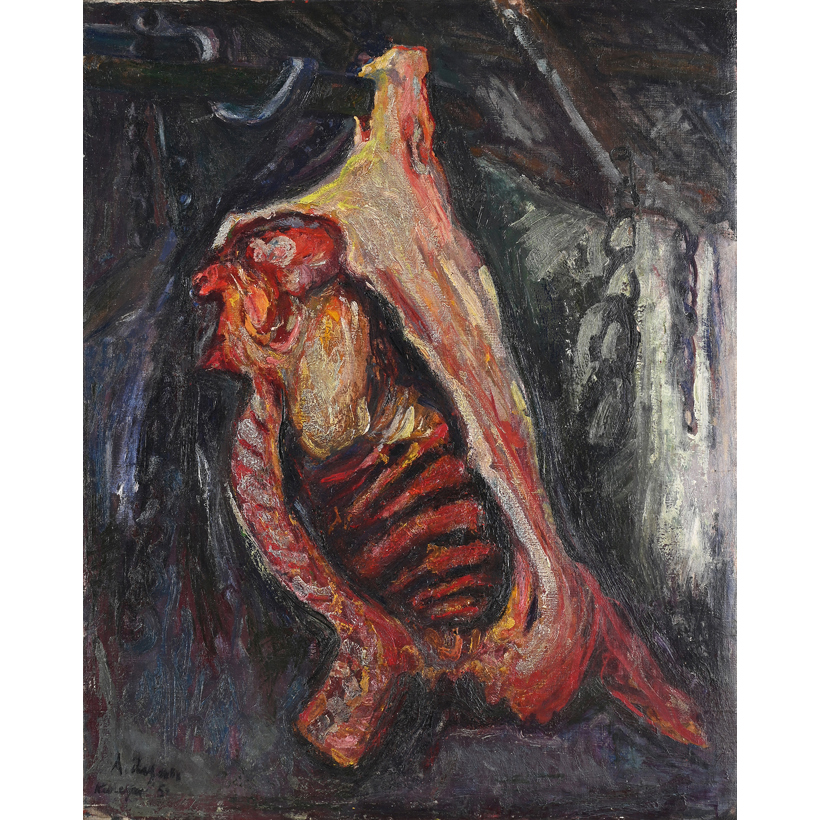
On Wednesday 8 July, we are pleased to present our summer auction of Modern & Contemporary Art. The auction includes the studio sale of British artist Adrian Ryan (1920-1998), who was known for his expressive landscapes, still lifes, portraits, and scenes of Cornwall, Suffolk, London, and France. The influence of Pierre Bonnard, Chaïm Soutine and the young Maurice Utrillo shows in the work of Adrian Ryan, as well as Modigliani. Here, we learn more about his life and work.

Adrian Ryan was born in Hampstead in 1920 into an unconventional, but wealthy family and grew up between homes in Cagnes-sur-Mer and at Hintlesham Hall in Suffolk. He was handsome, bohemian and liberal and lived at 48 Tite Street, Chelsea, which was then a close-knit artists’ community.
Generous to his less well-off artistic peers, he regularly bought their work or lent them money without expecting it back. One notable beneficiary was Lucian Freud.

Ryan’s first exhibition at the Redfern Gallery, in 1943, was selected by the esteemed curator Erica Brausen. That same year he visited Cornwall. Later, whilst living at Mousehole, he became associated with the St Ives Movement, although he always retained a London studio and he was a member of the influential Crypt Group. His friendships with many of the St Ives painters included Sven Berlin, Patrick Heron and Dod Procter especially.
Unlike his Cornish contemporaries, Ryan resisted the advent of Abstract Expressionism. His work, however, was expressionistic with strong abstract elements and earned him the sobriquet of “The English Soutine”.

His painting showed a meticulous, occupational need for detail, expressing forms at their most difficult and rounded while maintaining eye level high above his subject matter. His natural sense of object-relationship was superb, such as when composing still life. Batsford published his book on still life painting in 1978.
As well as Cornwall, backdrops which inspired him included Suffolk, Wales, the Var department of France, and Paris. Each location speaks broadly to shifts in his relationships. He was married three times, including to the painter Peggy Rose. During the 1940s and 50s, he was in a homosexual love triangle with Lucian Freud and John Minton.
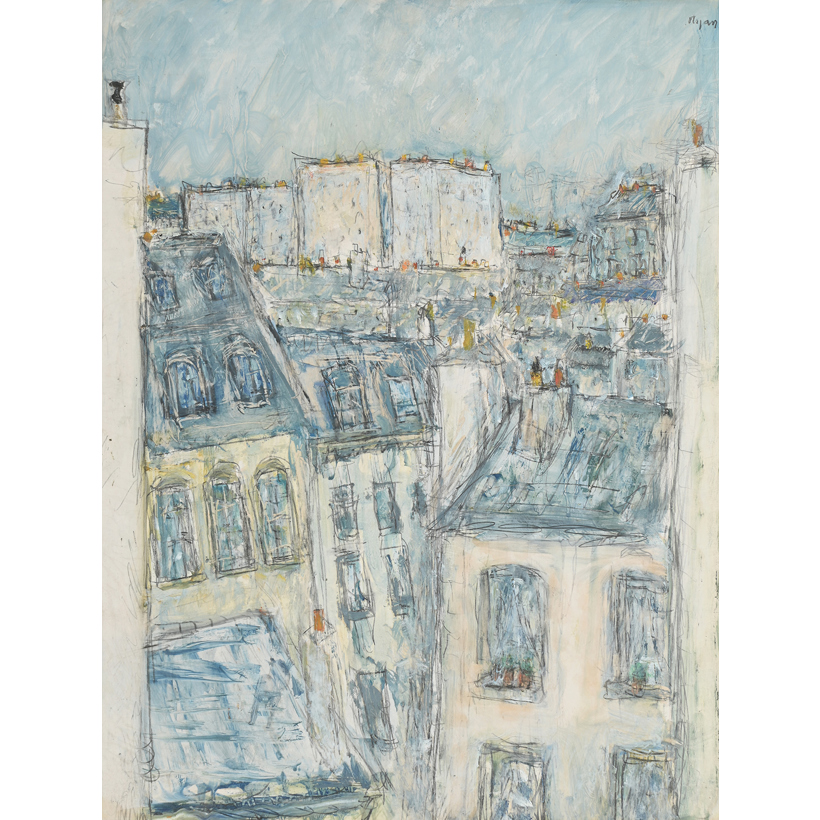
Ryan’s use of paint made him a very un-English artist. His emphasis was on painterliness and on the unusual false perspective in his paintings, looking down and simultaneously up. This found him repeating themes such as Mousehole harbour, painted from Old Hill Cottage, Love Lane, or the Suffolk elm tree at the end of his garden at Wood Farm, Fressingfield.
Adrian Ryan was self-deprecating and didn’t enjoy the artistic spotlight. It was Francis Bacon, a friend from Soho’s Colony Room, who called him “The best-kept secret in the art world.”

Auction Highlights


View page turning catalogue
Auction Details
The Adrian Ryan Studio Sale | Lots 189-227 (* Excluding Lots 191, 215 & 220)
Wednesday 8 July 2026, 10.30am BST
Donnington Priory, Newbury, Berkshire RG14 2JE
Bidding is available in person at our salerooms, online, by telephone or you can leave commission (absentee) bids.
Browse the auction
Sign up to email alerts
VIEWING:
- Viewing at Dreweatts London (highlights): 16-17 Pall Mall, SW1Y 5LU
- Tuesday 16 June: 10am-4pm
- Wednesday 17 June: 10am-7pm
- Thursday 18 June: 10am-4pm
- Viewing at Dreweatts Newbury (full sale): Donnington Priory, RG14 2JE
- Saturday 4 July: 10am-3pm
- Sunday 5 July 10am-3pm
- Monday 6 July: 10am-4pm
- Tuesday 7 July: 10am-4pm
- Dreweatts 360 Virtual Auction Tour | Take the Virtual Auction Tour
- Dreweatts Remote Viewing Service | Available from Saturday 4 July
Further Information:
General enquiries: + 44 (0) 1635 553 553 | pictures@dreweatts.com
Press enquiries: press@dreweatts.com
Request an Online Valuation

Get a free auction valuation from our specialists. Complete our easy online form and upload photos of your items.
Start Valuation


