

Auctions
We offer a diverse and exciting calendar of over 70 specialist auctions per annum as well as single owner collections and house sales.
Highlights


Valuations
Our valuation services include: free online auction valuations, virtual valuations, home visits and valuation days at our salerooms, where clients can receive advice on selling at Dreweatts from our market-leading specialists.


News & Videos
Keeping you up to date with auction news, highlights, videos and events from Dreweatts.
Highlights


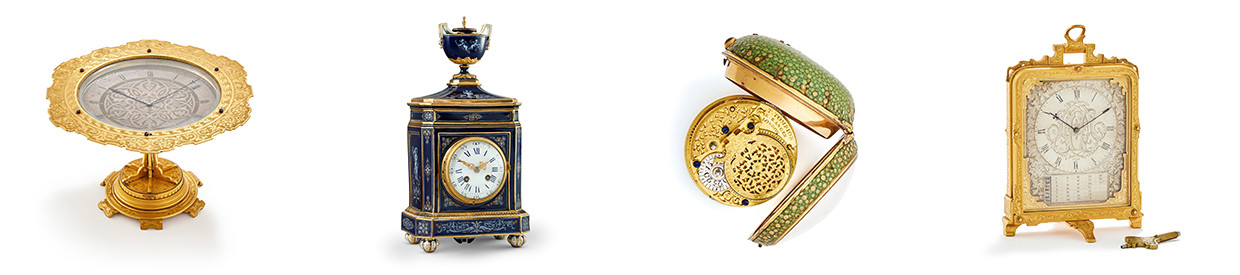
Celebrating Horological Excellence | Fine Clocks, Barometers and Scientific Instruments | Thursday 26 March 2026
On Thursday 26 March, we are delighted to present our auction of Fine Clocks, Barometers and Scientific Instruments. Showcasing an exceptional array of horological and scientific treasures, this sale features everything from a rare Victorian engraved gilt brass desk timepiece, an exquisitely decorated Meissen porcelain-cased mantel clocks and a historically significant verge pocket watch with movement by the “father of English clock and watchmaking”, Thomas Tompion. Whether you are a seasoned collector or a passionate connoisseur of mechanical ingenuity and precision craftsmanship, this auction offers an unparalleled opportunity to acquire remarkable examples of clockmaking and scientific instrumentation.
A rare Meissen porcelain-cased mantel clock decorated in the Limoges enamel style
This is an elegant eight-day mantel clock that not only tells the time but also strikes the hours on a bell. The gently curved enamel dial with Roman numerals, accented by bold five-minute markers for easy reading. Delicate pierced gilt hands sweep across the dial, which sits behind a hinged, bevelled glass cover framed by a finely milled bezel.
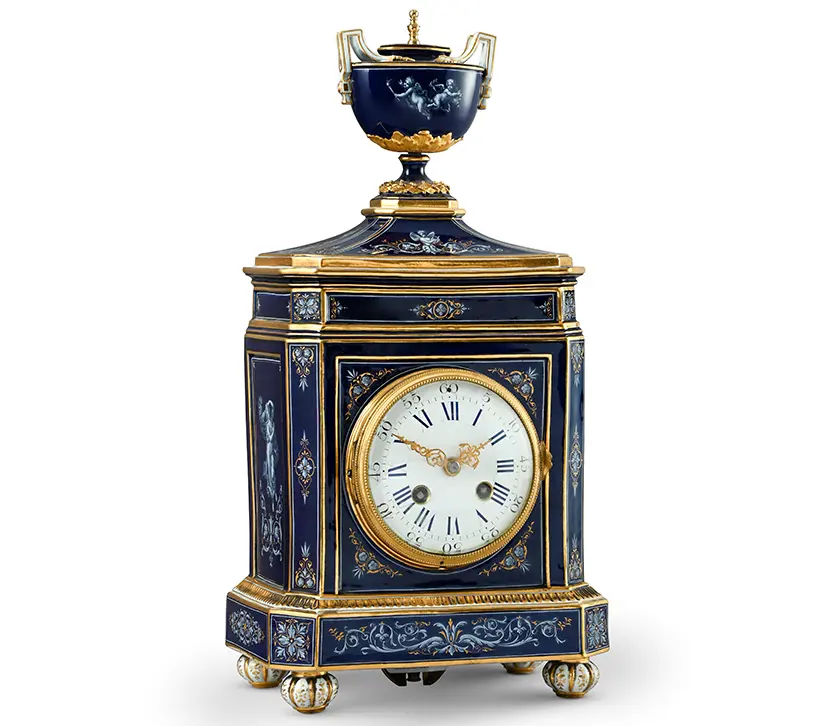
The clock is housed in a striking architectural porcelain case glazed in deep cobalt blue. At the top sits an urn-shaped finial with twin handles, decorated in soft monochrome enamel with cherubs in flight, inspired by the celebrated enamel traditions of Limoges. Rich gilded laurel bands and neoclassical scrollwork enhance the structure, while a winged muse forms the central decorative focus on the front.
The sides and corners are adorned with finely painted classical female figures and scrolling ornament, echoed around the dial and across the case. The rear mirrors the front’s design and features a glazed opening, allowing the movement to be viewed.
The clock rests on a gilt base with classical detailing and rounded feet, completing its balanced and harmonious form. Altogether, it is a refined fusion of precision engineering and decorative porcelain artistry, reflecting the taste and craftsmanship of the late Victorian period.
A very rare Victorian engraved gilt brass desk timepiece in the form of a tazza
This clock is an exceptionally detailed and finely made example of English horology, created by the London clockmaker Thomas Cole and numbered 1025. At its heart is a gilt (gold-finished) mechanical movement, carefully arranged beneath decorative plates and supported by elegant pillars secured with blued steel screws. The movement drives a precise English lever escapement, regulated by a sprung gold balance, ensuring accurate timekeeping.
The clock displays the time on a silvered dial with Roman numerals, positioned remotely from the movement. The dial is richly engraved with scrolling foliage and fitted with refined blued steel hands shaped like fleur-de-lys, visible behind a glass cover framed by a silvered bezel.

Equally impressive is the sculptural gilt case. Its eight-sided upper section is engraved with flowing floral scrollwork, while the lower portion rises from a circular base on six curved feet decorated with bellflower motifs. The underside discreetly houses the winding and adjustment controls, allowing the clock to be set and regulated without disturbing its elegant appearance.
Altogether, this clock combines mechanical ingenuity with refined decorative artistry, reflecting the high standards of London clockmaking and the taste for ornamental precision in its period.
A fine shagreen covered gilt brass verge pocket watch with champleve dial
This watch is a superb example of early English watchmaking, featuring a finely engineered movement created by Thomas Tompion in partnership with Edward Banger, and signed with their names and the serial number 3920. The mechanism is richly finished in gilt and supported by four elegantly shaped pillars, with a verge escapement regulated using a system associated with Tompion himself—an innovation that helped set new standards for accuracy at the turn of the 18th century.
The back of the movement is beautifully decorated with pierced and engraved scrolling foliage, centred on a sculptural balance cock adorned with a small female mask. A silvered regulation disc allows fine adjustment of the timekeeping, combining practical function with visual refinement.

The dial is equally striking. Made in gold or gilt, it is decorated in relief with scrolling foliage and two phoenixes, symbols of renewal, surrounding a central female mask. Roman numerals mark the hours, while distinctive lozenge and cartouche-shaped markers indicate the minutes. Slim blued steel hands complete the display, offering clarity without distracting from the decoration.
The watch is housed in a later gilt case covered in green-stained ray skin, a luxurious material prized for its texture and durability. Subtle bands of gilt studs encircle the case and bezel, while discreet openings allow the watch to be wound and adjusted. A suspension loop at the top and a push-button clasp at the side reflect how the watch would have been worn and handled.
Overall, this watch is a remarkable fusion of technical innovation and ornamental artistry, exemplifying the sophistication and prestige of London watchmaking in the early modern period.
A fine Victorian engraved gilt brass strut timepiece with manual calendar
This watch is a superb example of early English watchmaking, featuring a very finely finished movement created by Thomas Tompion in partnership with Edward Banger, and signed with their names and the serial number 3920. The mechanism is richly finished in gilt with the plates divided by four elegantly shaped pillars, with a verge escapement and sprung balance regulated using a system associated with Tompion himself—an innovation that helped set new standards for accuracy at the turn of the 18th century.
The back of the movement is beautifully decorated with backcock pierced and engraved with scrolling foliage over a small female mask. A silvered regulation disc allows fine adjustment of the timekeeping, combining practical function with visual refinement.

The dial is equally striking. Cast and gilt finished, it is decorated in relief with scrolling foliage and two phoenixes, symbols of renewal, surrounding a central female mask. Roman numerals mark the hours, while distinctive lozenge and cartouche-shaped markers indicate the minutes. Sculpted steel hands complete the display, offering clarity without distracting from the decoration.
At the back, an engraved panel identifies the retailer as C. F. Hancock, successor to Storr & Mortimer, proudly listing royal and imperial appointments, including Queen Adelaide. The address on Bruton Street in London places the clock firmly within the heart of 19th-century luxury craftsmanship. A hinged rear panel allows access for setting the hands and winding the movement, and the clock survives with its original engraved winding key.
Overall, this clock combines precision engineering with rich decorative detail and prestigious provenance, reflecting the high standards of design and workmanship expected by elite clients of the period.
View page turning catalogue
Auction Details
Thursday 26 March 2026, 10.30am GMT
Donnington Priory, Newbury, Berkshire RG14 2JE
Bidding is available in person at our salerooms, online, by telephone or you can leave commission (absentee) bids.
Browse the auction
Sign up to email alerts
Viewing:
Dreweatts Newbury, Donnington Priory, RG14 2JE
- Friday 20 March: 10am-4pm
- Saturday 21 March: 10am-3pm
- Sunday 22 March: 10am-3pm
- Monday 23 March: 10am-4pm
- Tuesday 24 March: 10am-4pm
- Wednesday 25 March: 10am-4pm
- Thursday 26 March: 9am-10.30am
Further Information:
General enquiries: + 44 (0) 1635 553 553 | clocks@dreweatts.com
Press enquiries: press@dreweatts.com

Fine Clocks, Barometers and Scientific Instruments
Request an Online Valuation

Get a free auction valuation from our specialists. Complete our easy online form and upload photos of your items.
Start Valuation


